

Global fashion production has reached an staggering 100+ billion garments every year, yet roughly 30–40% of them are never sold or worn. Despite growing pressure on the industry to adopt more sustainable practices, only 1% of collected material is actually recycled back into new fiber.
The result is a system that generates enormous waste: according to the European Environment Agency (EEA), 73% of European post-consumer textiles still end up in landfills or incinerators.
Only 1% of collected clothes are actually recycled back into new fiber. It isn't a collection problem, there is a fundamental data and infrastructure problem.
Reclaim, the first agentic recommerce solution, transforms physical products into continuous data assets. By digitizing the item's journey from the point of sale, brands unlock a new layer of garment lifecycle data and business intelligence that Reclaim makes profitable at scale.
Through lifecycle intelligence, brands gain real-time visibility into post-purchase performance and product lifespan. Asset verification gives every item a digital identity that proves what it's made of and where it came from - so it can be recycled or resold instead of becoming unidentified waste, making product traceability a core business advantage rather than a compliance burden.
This also unlocks behavioral intelligence: deep insights into how customers engage with their wardrobe. For brands, this identifies high-loyalty patterns, predicts resale intent, and allows them to capture the evolving value of their items - optimizing future production based on real-world use and turning post-purchase data into a strategic asset.
Reclaim connects every item to a digital record from the moment of purchase, turning a one-time sale into an ongoing relationship. As customers engage with their wardrobe through the platform, every interaction builds customer loyalty, creating a direct feedback loop between brands and the people who wear their products.
Frictionless trade-ins transform recommerce and resale into a direct engine for repurchase cycles, keeping customers inside the brand ecosystem while generating a secondary stream of high-margin circular inventory directly from a brand's own customer base.
On the compliance side, turnkey Digital Product Passports (DPP) automate EU regulatory requirements and turn them into a brand advantage - removing friction without adding overhead, while strengthening product traceability across the full garment lifecycle.
Beyond loyalty and compliance, Reclaim unlocks new recovery possibilities. Brands can reclaim value from past seasons and deadstock through profitable recovery routes, powered by lifecycle intelligence and real-time behavioral data that makes every product decision smarter.
Hosted at Norrsken Barcelona, Europe's largest hub for impact-driven technology, Reclaim's launch event focused on the practical circular fashion infrastructure required to scale circularity for brands and customers. These four executives represent the structural alignment needed to build a system that works: from the first sketch to the final recovery.

Design, relevance and consumer adoption
Pablo Erroz, Founder & Creative Director, Erroz
“To talk about growth in fashion today, we need to talk about everything except fashion.”
Creative direction influences relevance, community, and long-term engagement. Products remain in use longer when brands support ownership beyond first use and maintain an active relationship with the customer.

Materials, recycling and clarity at product level
Laura Bonareu, Partner, The Post Fiber
“Innovation only creates value when it evolves the product and is clear enough for the consumer to understand.”
Materials innovation scales when products are designed for traceability and recovery. Clear product information enables recycling systems to operate with precision and consistency.
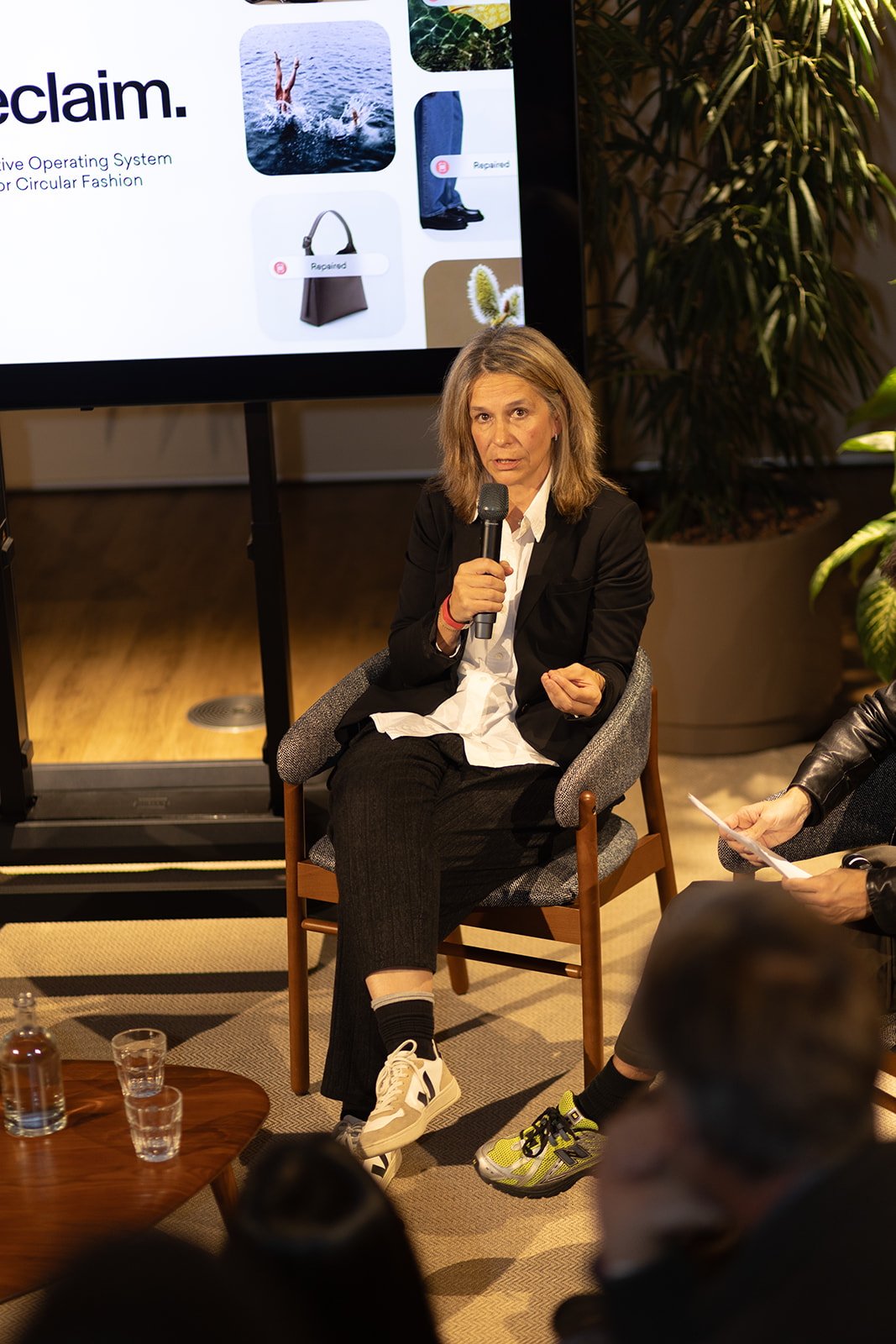
Retail as a driver of product longevity
María España . CEO, Cuylás
“We need to build a product’s second life into the moment of purchase, giving customers a system that guides them beyond its first use.”
Retail decisions influence durability, future value, and recovery outcomes from the moment of purchase. Structured recovery paths keep products connected to the brand throughout ownership.

Technology as circular infrastructure
Melissa McDermott, Founder & CEO, Reclaim
“We are building AI systems that connect consumer incentives, brand objectives, and product recovery into a single operational framework.”
Technology provides the connective layer that aligns incentives, data, and execution. Reclaim enables consistent recovery decisions across the lifecycle, supported by predictive intelligence and real-time measurement.
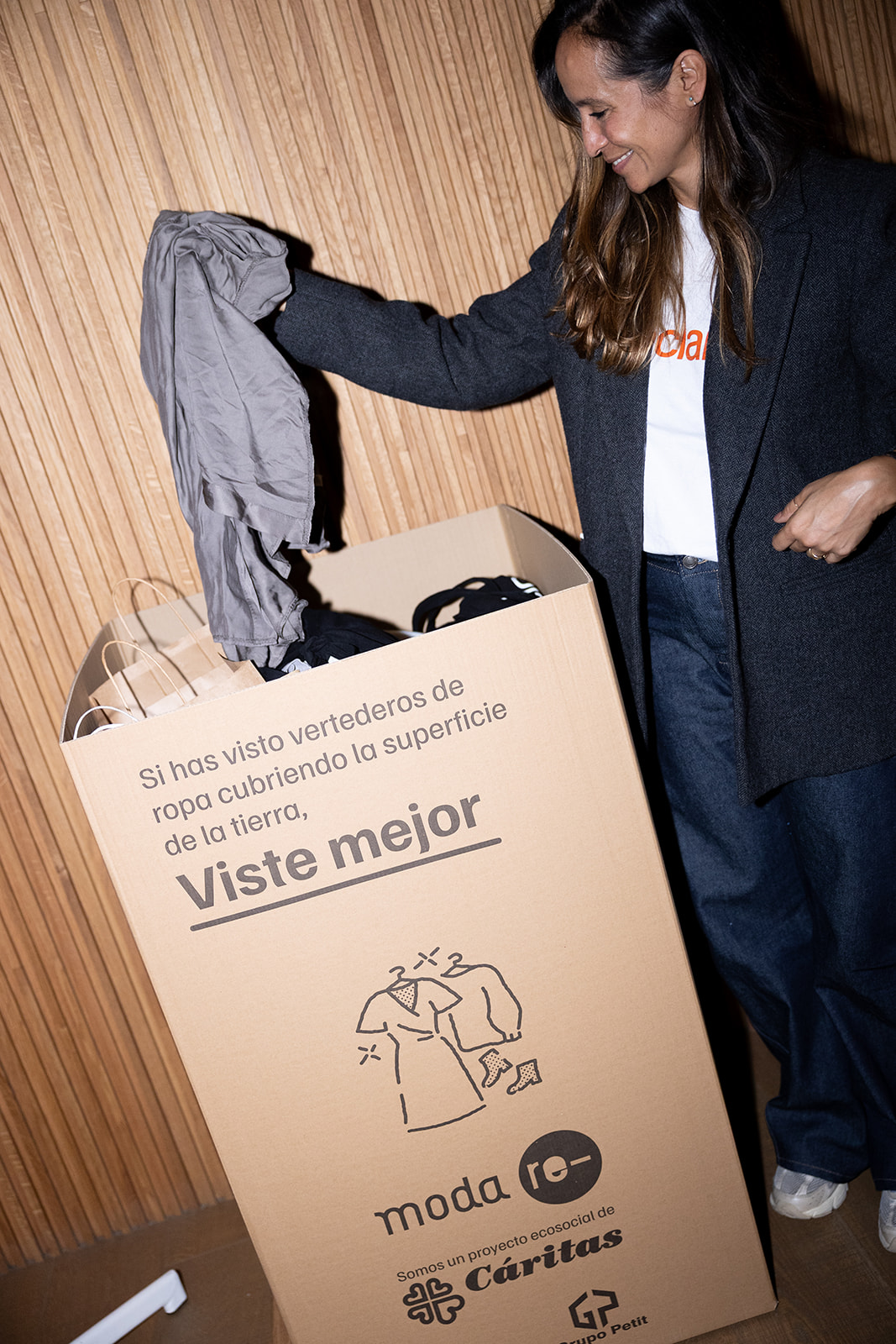
Partner spotlight. Moda re-
As part of the Reclaim launch, recovery operations were supported by Moda re-, a circular economy initiative specialized in the sorting and valorisation of donated textiles. Moda re- ensures that post-consumer garments are correctly classified and routed toward reuse or recycling pathways.
Operating at scale across Spain, Moda re- connects textile recovery with social employment, bringing operational depth and real-world execution to post-consumer circularity.
Circularity only scales when it becomes a natural part of the business. Reclaim is turning that infrastructure into an automated reality for brands, consumers and the planet.